Landmark consultant

Study in Slovenia

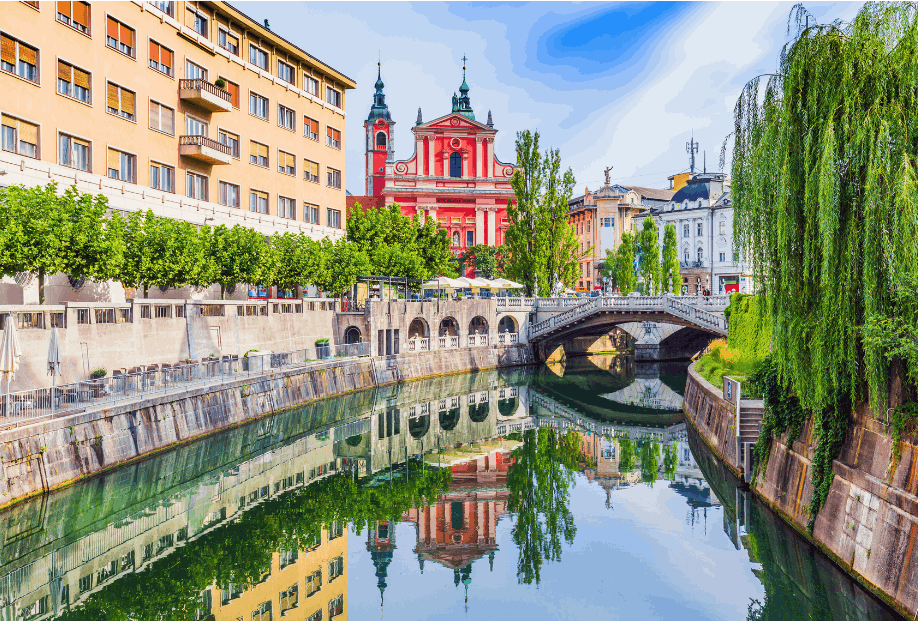
Slovenia is a small, picturesque country located in Central Europe. It is bordered by Austria to the north, Italy to the west, Hungary to the northeast, and Croatia to the south and southwest. The Adriatic Sea lies to the southwest. The capital city is Ljubljana. Other major cities include Maribor, Celje, and Kranj. The official language is Slovene. The currency is the Euro (EUR).


Slovenia's combination of natural beauty, cultural richness, and historical significance makes it an attractive destination for travelers and students.


Country Facts

Slovene is the official language, but many higher education programs, especially at the postgraduate level, are offered in English. Slovenian culture is influenced by its Slavic roots, as well as historical ties to other European nations. Traditional music, dance, and folklore play a significant role in cultural events and festivals. The majority of Slovenians are Roman Catholic, but the country is known for its religious tolerance. Slovenia is renowned for its diverse landscapes, including the Julian Alps, Triglav National Park, picturesque lakes (such as Lake Bled and Lake Bohinj), and the Škocjan Caves, a UNESCO World Heritage Site.

Why Slovenia

Slovenia has a well-developed higher education system with both public and private universities.
The largest and oldest university is the University of Ljubljana, followed by the University of Maribor and the University of Primorska.
Higher education institutions offer a wide range of study programs, and many Master's and Ph.D. programs are available in English. Higher Education: Includes Bachelor's, Master's, and Doctoral programs.

Manufacturing and Industry: Slovenia has a strong manufacturing sector, including automotive, pharmaceuticals, and machinery.
Tourism: The tourism industry is significant, with opportunities in hospitality, travel, and related services.
Information Technology: There is a growing demand for IT professionals in Slovenia.
Finance and Banking: The financial sector provides opportunities in banking, insurance, and financial services. 
Networking is essential in Slovenia. Attend industry events, join professional associations, and connect with professionals on platforms like LinkedIn.

Various scholarships are available for international students, both from Slovenian institutions and international organizations. Higher education institutions in Slovenia are subject to quality assurance processes carried out by the Slovenian Quality Assurance Agency for Higher Education (NAKVIS). Slovenia is an increasingly popular destination for international students due to its high-quality education and relatively low living costs. Slovenia offers a vibrant student life with various cultural events, sports activities, and student organizations. Tuition fees for EU/EEA students are generally lower than for non-EU/EEA students.
Some programs may have no tuition fees for EU/EEA students.

Admission to higher education programs is based on the completion of secondary education and success in the national matura exam.
International students may need to demonstrate proficiency in the Slovene language or provide proof of English proficiency for programs taught in English. The academic year in Slovenia generally starts in October and consists of two semesters. The first semester usually lasts from October to January, and the second semester from February to June.

© Copyright 2024 Landmark Consultant All Rights Reserved

Free AI Website Builder